
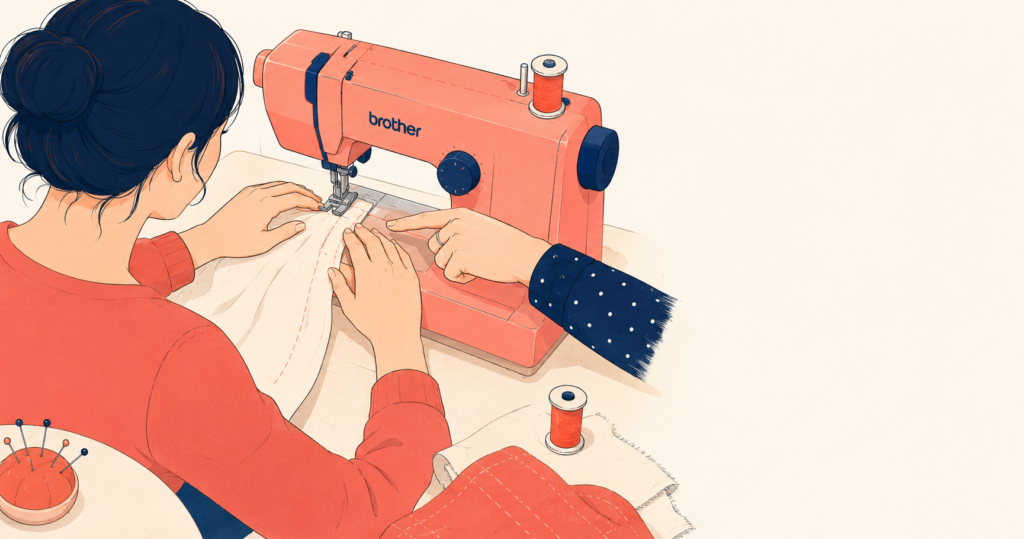
There’s nothing wrong with wanting to teach yourself. Most people who walk into our school first tried — they bought a machine, watched a few videos, sat down on a Saturday morning with good intentions, and then quietly put it all away in a cupboard. Not because they failed. Because no one had shown them where to start.
Learning to sew isn’t actually hard. But learning it on your own is hard, because sewing is one of those skills where the things that go wrong don’t tell you why they went wrong. Your thread bunches and you don’t know if it’s the tension, the threading, the bobbin, or the needle. You give up not because you can’t sew — but because you can’t troubleshoot.
So here are the five honest reasons a sewing class works better than teaching yourself. I’m not saying this because I run one. I’m saying this because I’ve taught hundreds of women who tried it the other way first.
I’d avoided sewing my whole life because I thought I wasn’t crafty enough. Within two lessons at Sew and Grow I’d made a cushion cover. Within two months I was making my own clothes.
Part 01Someone is watching the right thing
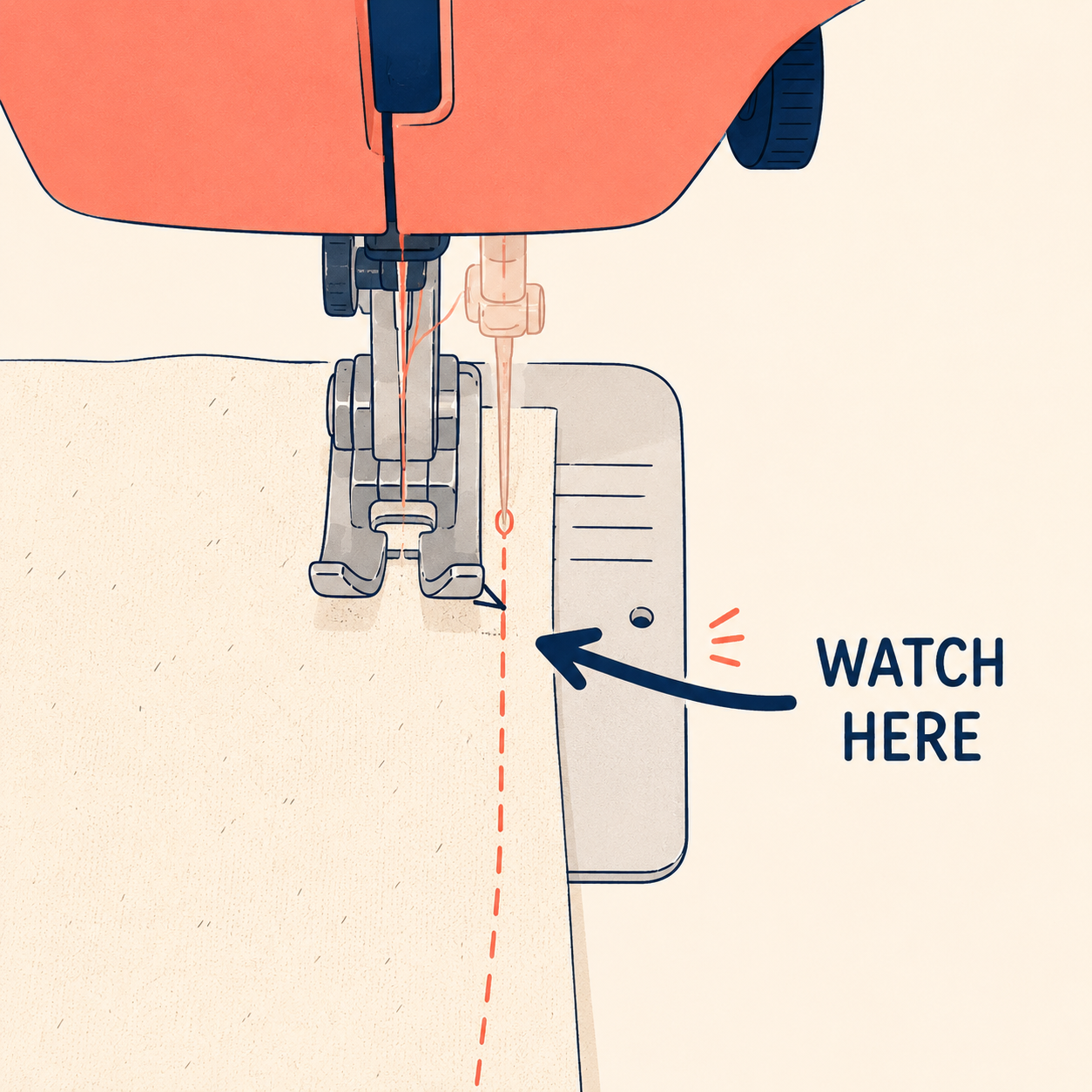
When you sew alone, you watch the needle. That’s the natural thing to do — it’s the moving part, it’s where the action seems to be. So your fabric drifts, your seam wanders, and you don’t know why.
In a class, the first thing I tell every beginner is: don’t watch the needle, watch the edge of the presser foot. That single sentence saves people weeks of frustration. But it’s the kind of thing that’s almost impossible to learn from a video, because the video can’t see what you are doing wrong. A teacher can. That’s the whole difference.
The other thing a teacher catches is posture, hand placement, how hard you’re pressing the pedal, whether your shoulders are up around your ears (they always are, in the first lesson). None of that is in a tutorial.
Part 02You learn the right things in the right order
YouTube is a library, not a curriculum. You can find a video on absolutely anything — how to sew a French seam, how to install an invisible zip, how to make a welt pocket. What YouTube can’t do is tell you which one you should learn first, second, third.
So most self-taught beginners end up with a strange shape of knowledge: they can do one complicated thing they saw a video about, but they can’t do the simple things that go underneath it. They’ve sewn a buttonhole but they can’t sew a straight line. They know what a bias binding is but they don’t know how to thread their bobbin.
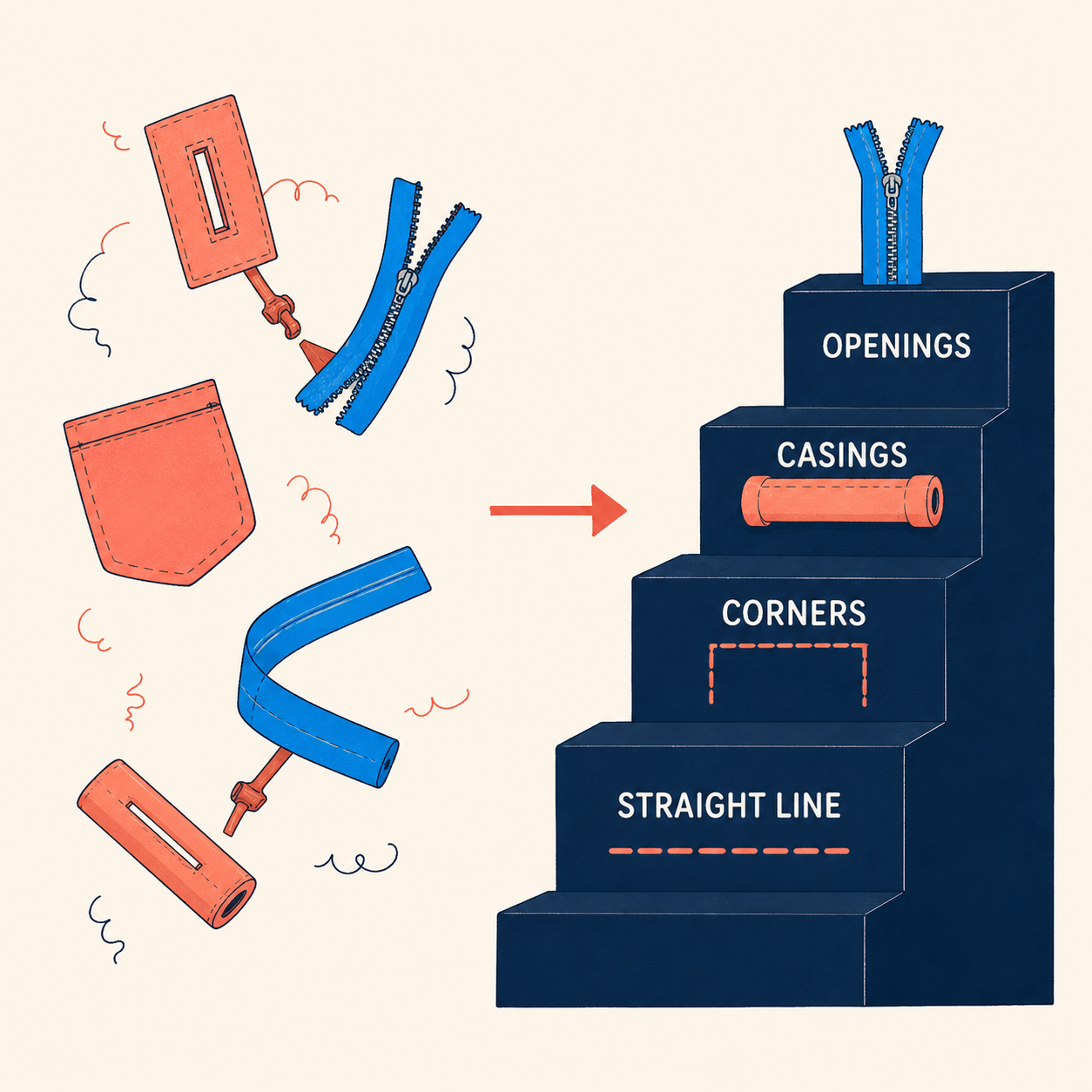
A class teaches in the order that builds. Straight lines first. Then corners. Then casings. Then openings. Each lesson rests on the one before it. By the time you’re sewing your first garment, every step makes sense because you’ve already done the smaller version of it.
Part 03You don’t fight your machine alone
This is the one that ends most self-taught sewing journeys. The machine does something weird, you don’t know why, and there’s no one to ask.
Almost always, it’s threading. I’ve said this in nearly every lesson I’ve ever taught: when your machine acts up, the first thing to do is rethread it from scratch — top thread and bobbin both. Not adjust the tension dial. Not change the needle. Rethread. Nine times out of ten, that fixes it.
But if no one has told you that, you’ll be googling “why is my sewing machine doing this” at 9pm on a Sunday, watching three contradictory videos, and slowly losing confidence. In a class, you raise your hand, the teacher looks at your machine for ten seconds, and the problem is solved. That’s it. That’s the whole difference between giving up and carrying on.
My first seam looked like a drunken spider crossed the fabric. By week three I was sewing a hoodie. Fatima never once made me feel like the questions I asked were silly.
Part 04Your confidence is protected
This is the reason no one talks about, and it’s the most important one.
Sewing is emotional. You start a project, you put hours into it, and if it doesn’t turn out — that feels personal. A lot of people who try to teach themselves don’t quit because they couldn’t learn the technique. They quit because their first three projects came out wrong and they decided they “just weren’t a sewing person.”
In a class, your first project is chosen for you, by someone who knows what beginners can actually finish. You make a drawstring bag because a drawstring bag will work. You make a cushion cover because a cushion cover will work. You walk out of your first lesson holding something you made, and that feeling — that “I actually did this” feeling — is what carries you to the second lesson.
This is the part of teaching that has nothing to do with the machine. It’s making sure beginners don’t lose faith in themselves before they’ve even started.
Part 05You’re not learning on a disposable sewing machine
Most people, when they decide to teach themselves, buy the cheapest sewing machine they can find. It makes sense — why spend a lot on something you don’t even know if you’ll stick with?
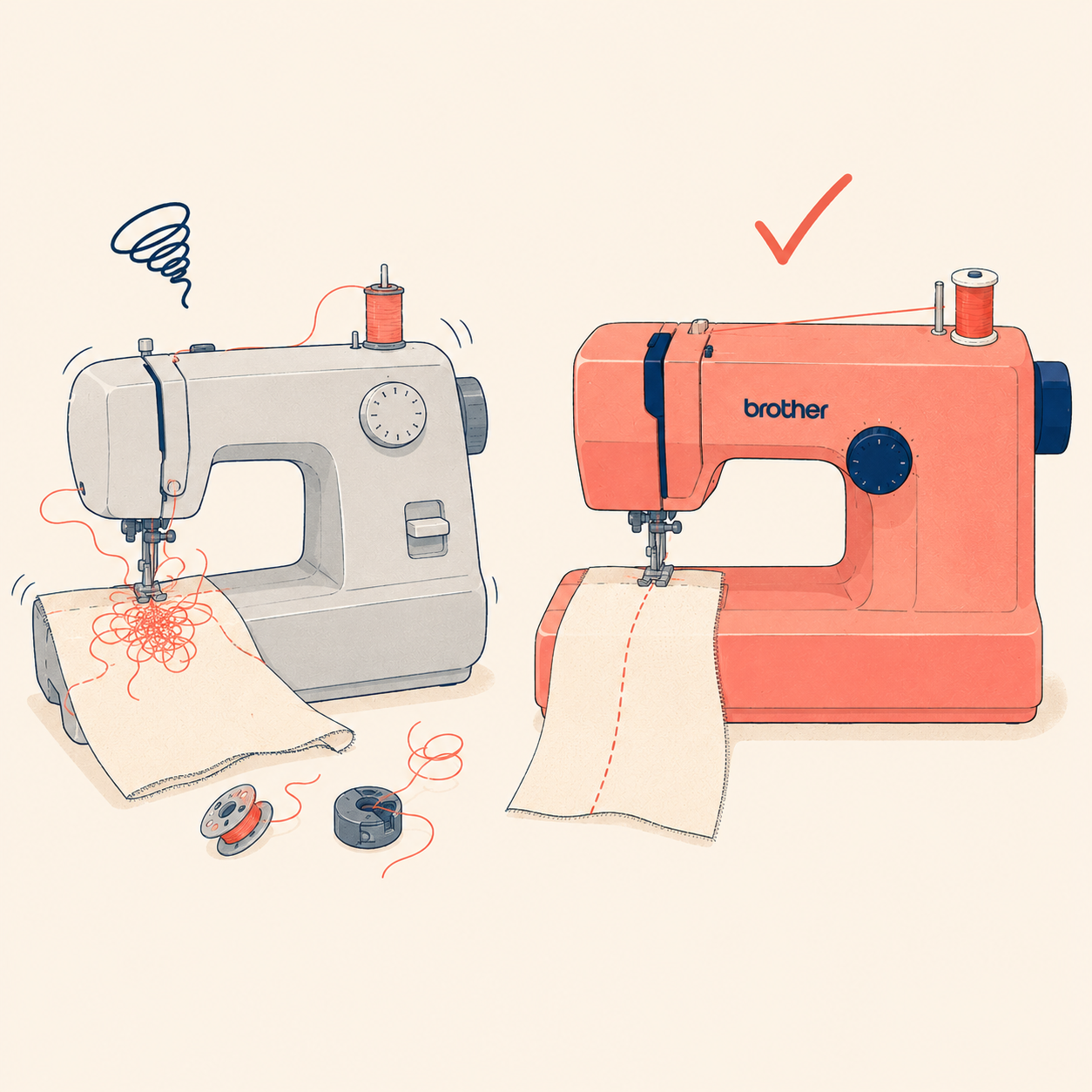
The problem is that the cheapest machines on the market — what I call disposable sewing machines — are difficult to sew on even for experienced sewists. The tension is finicky, the feed dogs don’t grip properly, the bobbin case is plastic and jams. So the beginner thinks I can’t sew, when actually it’s the machine that can’t sew. They’ve blamed themselves for what was really the equipment.
In our beginner programme, every student sews on a Brother machine that works properly, with someone next to them to set it up. In our online course, we recommend specific models in a specific price range — not the cheapest, not the most expensive, but the ones that will let you focus on learning instead of fighting. Either way, the first machine you sit at is one that’s going to behave.
If you’ve already tried teaching yourself and given up — that’s not a sign you’re not a sewing person. It’s a sign you didn’t have a teacher. Most of our best students started exactly where you are right now.
Part 06Two routes — pick the one that fits your life
You don’t have to come to Johannesburg to learn properly. We built both because not everyone can.
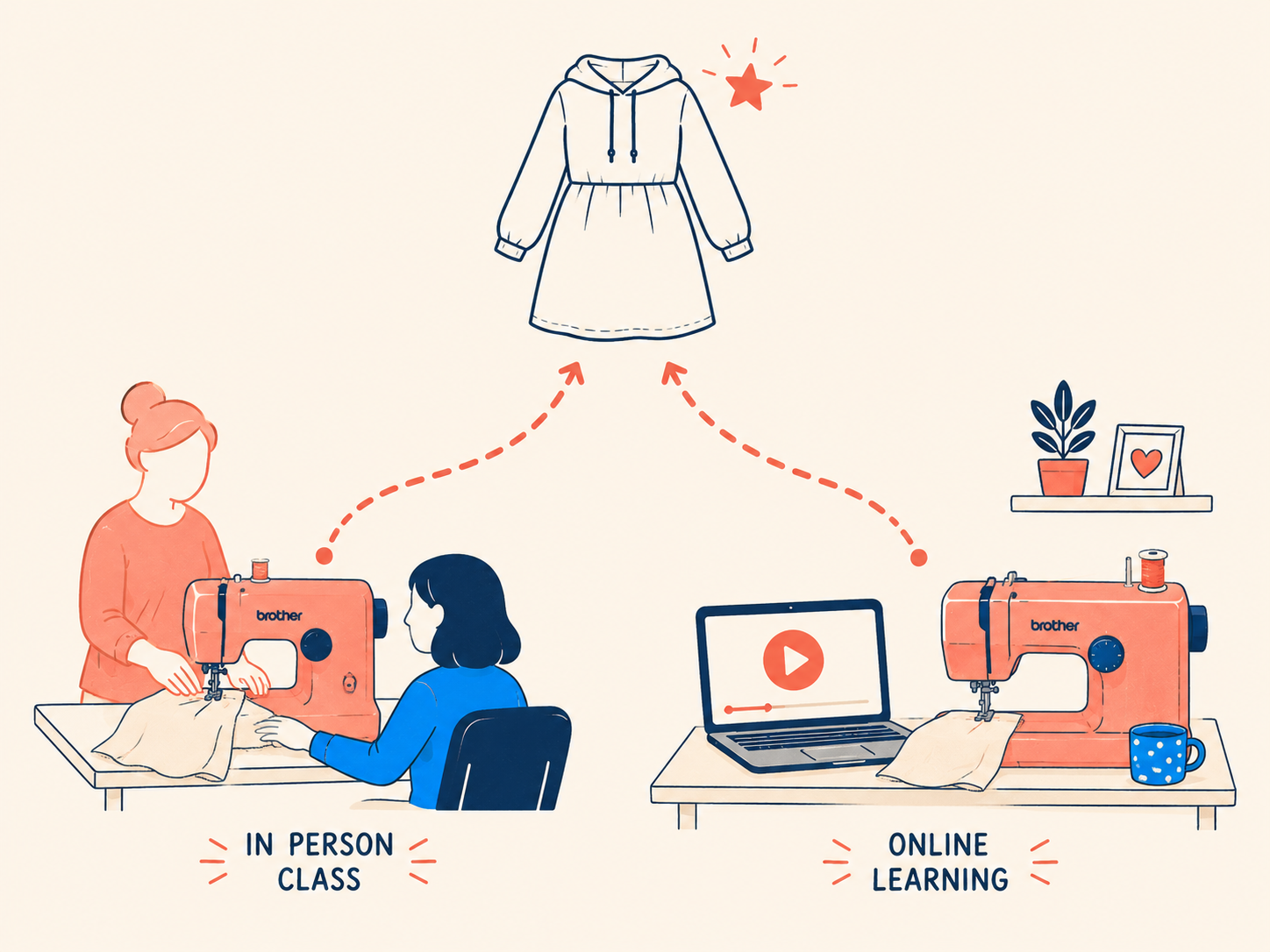
Don’t figure this out on your own.
Most of our students start exactly where you are now. The difference is they don’t stay stuck there. Whether you join us in person in Johannesburg or online from anywhere, you’ll get the structure, support, and the right machine to actually succeed.
I walked in not knowing what a bobbin was. Six weeks later I made a duvet cover for my daughter’s bed. The structure of the lessons is what made it click.
Got a question Fatima can answer?
If you’re on the fence about teaching yourself versus taking a class — or you’re stuck on a specific machine problem — Fatima reads every email personally.
Email Fatima a question →