
In South Africa, accredited sewing qualifications run from foundational, beginner-friendly certificates all the way up to specialised, technical ones — each opening different doors, from self-employment to factory production to pattern-making. Understanding the ladder helps you pick the right starting point and see exactly where a recognised qualification can take you.
First, a word on what ‘accredited’ really means, because it's the thing that gives these qualifications their power. Occupational qualifications are overseen by the QCTO (the Quality Council for Trades and Occupations) and quality-assured through a SETA — for the clothing and textile trades, the FP&M SETA. When a course carries that accreditation, the qualification is registered against a national standard, and your competence is independently assessed before it's awarded.
That independent assessment is why an accredited qualification is trusted where a printed ‘certificate of completion’ isn't — by employers and by paying clients.
The ladder of accredited courses — and where each leads
- 🧵Handicraft Sewer — the foundation. You become a capable garment constructor, able to measure, cut and build a garment from scratch. Ideal for self-employment — sewing to order, alterations, home-based work, your own small label — and it's the base every course above it builds on.
- 🏭Sewing Machine Operator — the production route. The factory-ready qualification, focused on industrial machines. It opens work as a machinist in clothing and textile manufacturing — production lines, cut-make-trim, factories.
- 👗Seamstress — the dressmaking route. Deeper into dressmaking, pattern cutting and design. It suits work as a dressmaker or made-to-measure specialist, custom and occasion wear, and running your own dressmaking business.
- 📐Pattern Making Assistant — the technical route. A sought-after skill pointing toward work with manufacturers and designers, creating the patterns garments are built from — harder to fill, and valued accordingly.
Notice the pattern: these are all skills employers actively look for and that private clients pay for directly. The industry needs machinists; every community needs someone who can alter and make clothes; designers and factories need pattern makers. And across all of them, accreditation is what earns trust. Wherever you want to end up on that ladder, you start the same way — by mastering the foundations.
Don't agonise over which qualification to aim for before you begin — every route on that ladder starts at the same place: the Handicraft Sewer foundation. Get that right, and you can climb toward production, dressmaking or pattern-making later, once you've discovered what you love. Start at the bottom rung; it holds all the others up.
The Handicraft Sewer course
It's the bottom rung that holds up all the others — the accredited Handicraft Sewer foundation that makes you a capable garment constructor — and the base our Sewing Machine Operator, Seamstress and Pattern Making Assistant qualifications build on. Wherever you want to end up, you start here.
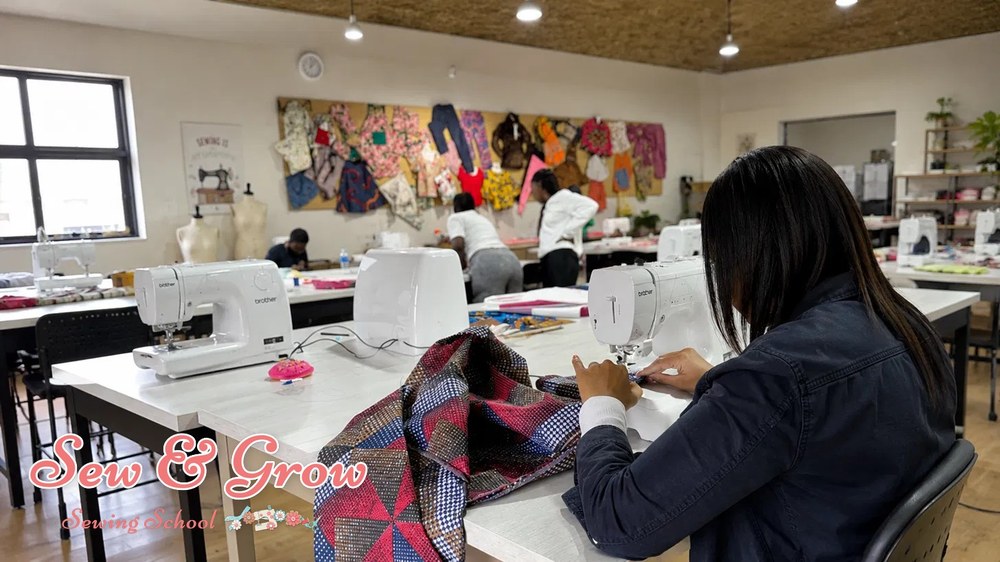
Everything is provided — every machine, all the fabric, tools and patterns — because your only job here is to learn.
Want to see the full ladder of qualifications? Ask below — we reply to every comment.
Join the conversation
Trying to understand the sewing-qualification ladder and where it leads? Ask us anything — we reply to every comment.
is pattern making assistant really that in demand? thinking long term
It is, Lerato — pattern-making is a technical, harder-to-fill skill, so manufacturers and designers value it accordingly. It's a strong long-term target; you'd build toward it after the Handicraft foundation. Message us and we'll map the path from where you are.
ive never seen it laid out this clearly before 🙌 i had no idea there was a whole ladder from beginner up to pattern making
Most people never get the full picture, Nandi — which makes it hard to plan. The lovely part is they all start at the same foundation, so you don't have to decide your destination now. Master the base and the higher rungs open up when you're ready. 🧵
did handicraft then the sewing machine operator qualification and walked into a factory machinist job. the accredited part is exactly what the employer wanted