Being ‘good’ at sewing isn't one skill — it's a dozen small ones working together.
A proper beginner sewing course teaches you the whole craft, in the right order: how the machines really work, how to choose fabric, how to read and cut a pattern, and how to construct and finish a real garment from start to finish. Being good at sewing isn't one skill — it's a dozen small ones working together until making a garment feels effortless.
Most people picture sewing as just guiding fabric under a needle. It isn't — and that misunderstanding is exactly why self-taught beginners get stuck.
Real sewing is a chain of skills. If one link is missing, the whole thing falls apart.
The chain, link by link
A good course builds every link deliberately, so nothing is left to guesswork. Here's what that chain actually looks like on our Handicraft Sewer course:
1
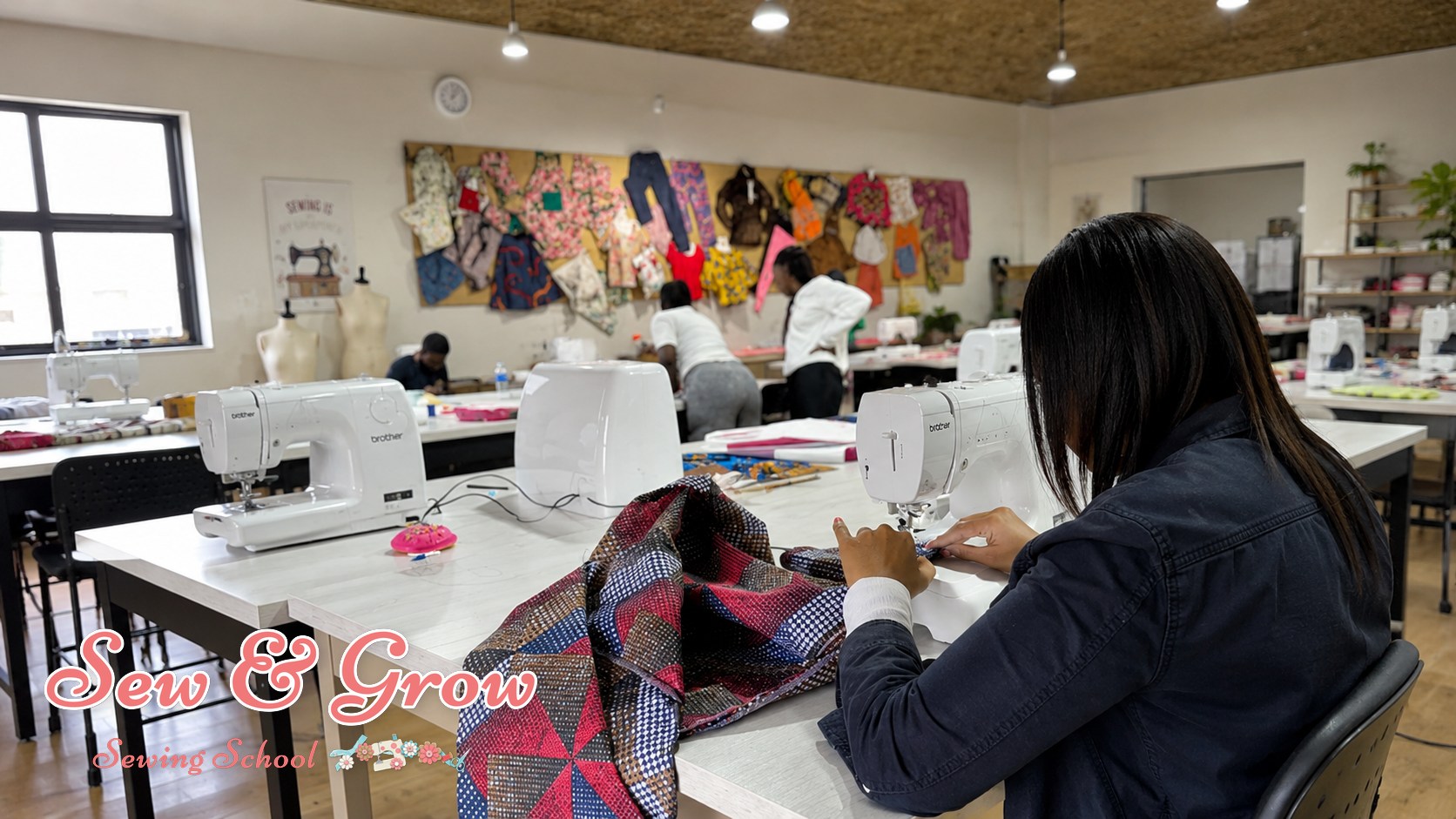
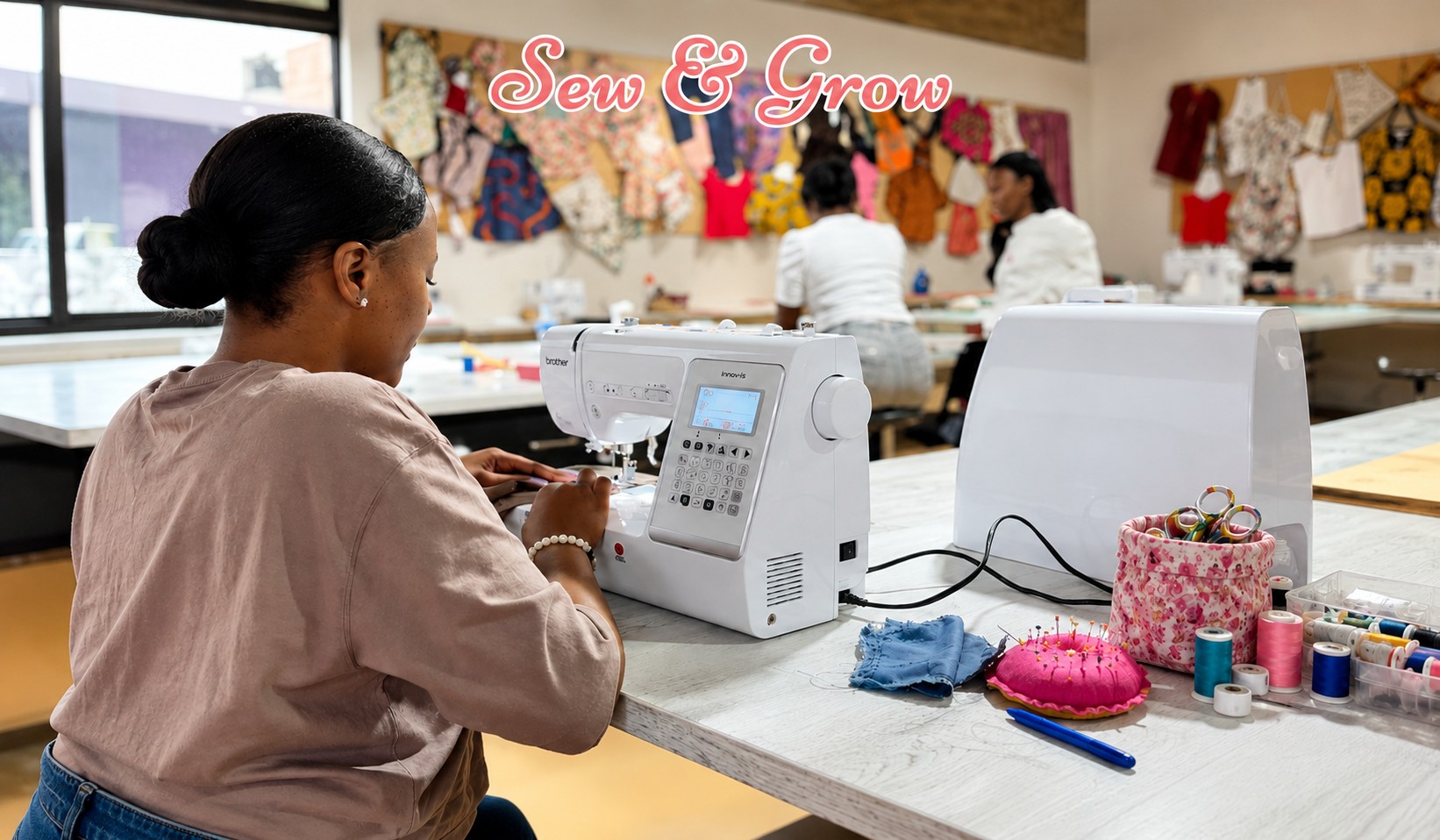
The machines — properlyNot just switching them on: threading, changing needles, adjusting, and fixing the small faults that make beginners give up — on both a sewing machine and an overlocker (the machine that gives edges that neat, shop-bought finish). When the machine stops being scary, everything else opens up.
2
Reading fabricWhich fabric suits which project, how it behaves and stretches, which thread to pair with it, and which notions — buttons, zips, elastic, trims — actually finish a garment. This is what separates ‘homemade-looking’ from professional.
3
Measuring, patterns and cuttingTake a real person's measurements, read a shop-bought pattern, and cut your fabric knowing it will come together. Cutting is where most beginners quietly ruin a project — here you're taught to get it right.
4
True garment constructionThe heart of it: seams, hems, zips, buttonholes, facings, gathering, sewing with stretch — the building blocks every advanced sewer relies on. You practise them until your hands know them.
5
Finishing and presentingThe difference between “I made this” and “I'd sell this.”
You don't learn this from a worksheet — you learn it by making 13 real projects, climbing from a simple drawstring bag to a fully tailored men's shirt. Each project layers new skills onto the last, so your ability grows visibly, week by week.
20weeks, full-time
13real projects
570+hours
Fatima's tip
People think talent decides who can sew. After 40 years I can tell you it's almost always the foundations — taught in order and practised until they're automatic. Miss a link early and you'll feel it in every project; build them all and the craft stops fighting you.
From ‘did a class’ to garment constructor
By the end of the 20 weeks — full-time, everything provided, taught by people who've done this for 40 years — you're not someone who “did a sewing class.” You're a garment constructor, with a nationally recognised qualification to prove it. That's what being good really means: not one trick, but the whole foundation — so when you sit down with fabric and a pattern, it simply flows.
A dozen small skills · one craft that flows
The accredited way in
The Handicraft Sewer course
It's where those dozen small skills get built in the right order — from your first threaded machine to a tailored shirt — because ‘good at sewing’ is a foundation, and this is where you lay it.
🧵 40+ years teaching
🎓 10,000+ students
✅ 100% pass rate
🏆 QCTO accredited
📄 No matric needed
Everything is provided — every machine, all the fabric, tools and patterns — because your only job here is to learn.
Frequently Asked Questions
How many projects will I actually make?
13 real garments and items, climbing from a simple drawstring bag to a fully tailored men's shirt. Each one layers new skills onto the last, so your ability grows visibly.
Do you teach the overlocker too, or just a normal machine?
Both. You learn the sewing machine and the overlocker — the machine that gives edges that neat, shop-bought finish — because a professional result needs both.
I can already sew a bit — is a beginner course too basic?
Most ‘self-taught a bit’ sewers have gaps in the foundations, usually in cutting, fabric or finishing. The course fills exactly those, which is what makes garments finally come together.
How long is it, and is it full-time?
20 weeks, full-time, Monday to Thursday — 72 teaching days in all, with every machine and material provided.
Written by
Fatima Fazal
Founder of Sew & Grow with over 40 years in sewing — from couture and wedding gowns to teaching more than 10,000 beginners. She and her team run Johannesburg's accredited Handicraft Sewer course, and are authorised Brother distributors too.

Join the conversation
Wondering what ‘being good at sewing’ really takes? Ask away — we read and reply to every comment.
cutting is 100% where i mess up every single time 😭 didnt even realise it was a skill you could be taught properly
You're far from alone, Refilwe — cutting quietly ruins more projects than any other step. It's measuring, reading the pattern and handling the fabric all at once, and every part of it is teachable. Once it clicks, the whole garment behaves. ✂️
can all of this be learned online, or does the construction part have to be in person?
Good question, Aisha. Construction is hands-on — it's the part that really needs a teacher beside you — so the accredited course is in person. That said, we run online classes for the parts that work well remotely; message us and we'll point you to the right fit.
the drawstring bag to a mens shirt journey is wild 😂 cant picture making a shirt but i suppose thats the whole point